BIRD CORP

Next Steps...

Characters

Once I knew the direction I wanted to take, I started working on the character designs. While drawing, I had the sudden inspiration to draw the budgie in a suit, and from there, I drew many more in a fit of inspiration. And that is when Bird Corp really started to take shape.

Throughout my drawing process it involved significant trial and error as several initial sketches failed to match my intended style. The Budgie design, however, aligned perfectly with my vision, setting the standard for the characters. In constrast, the Peacock design lacked this cohesion and clashed with my character design asthetics, thus it has been removed from the collection.
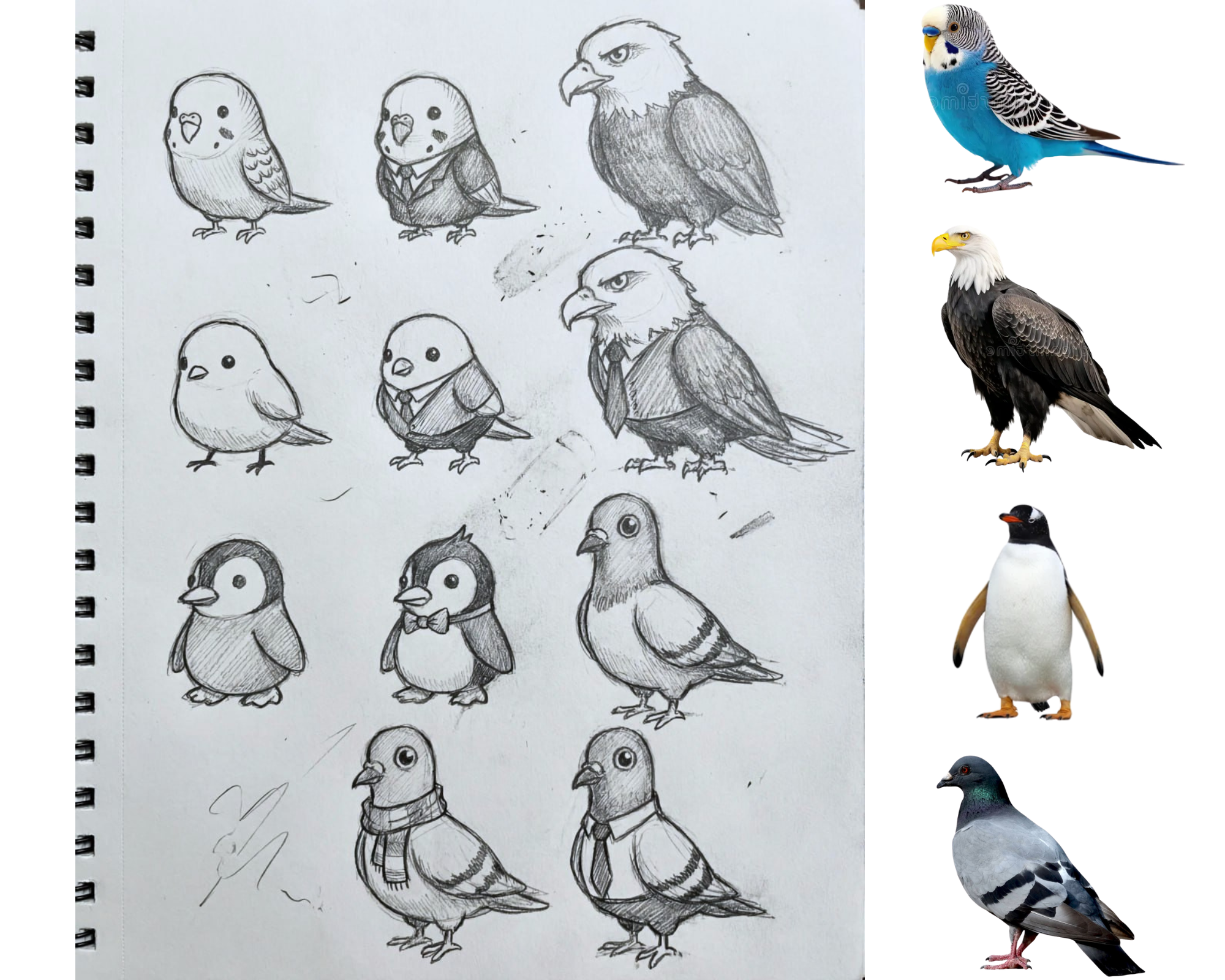
character design sketches
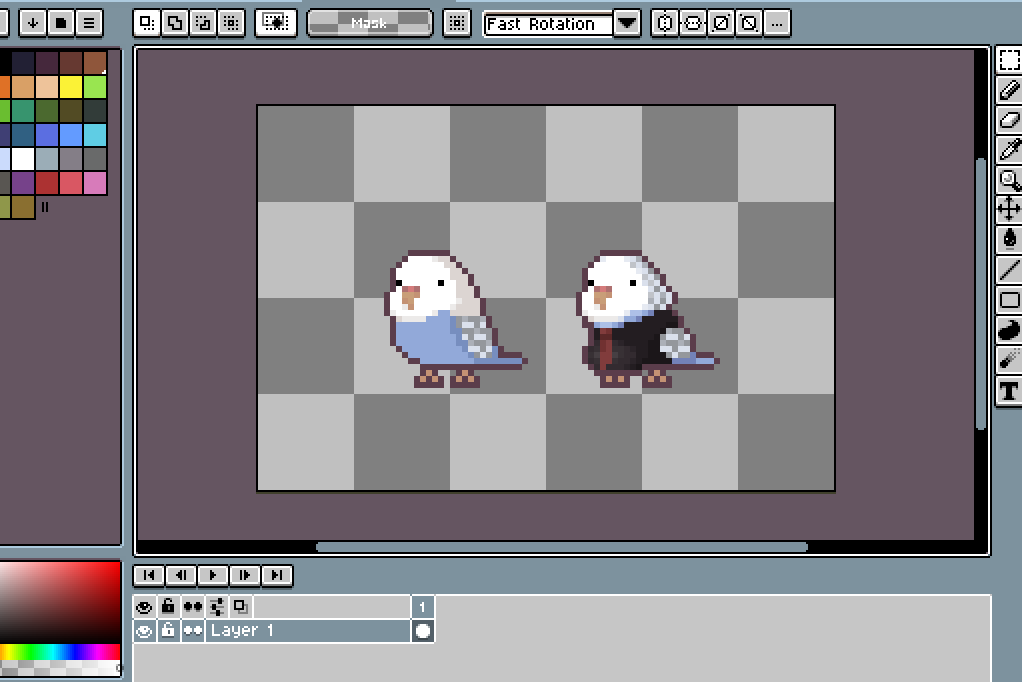
budgie first look vs final
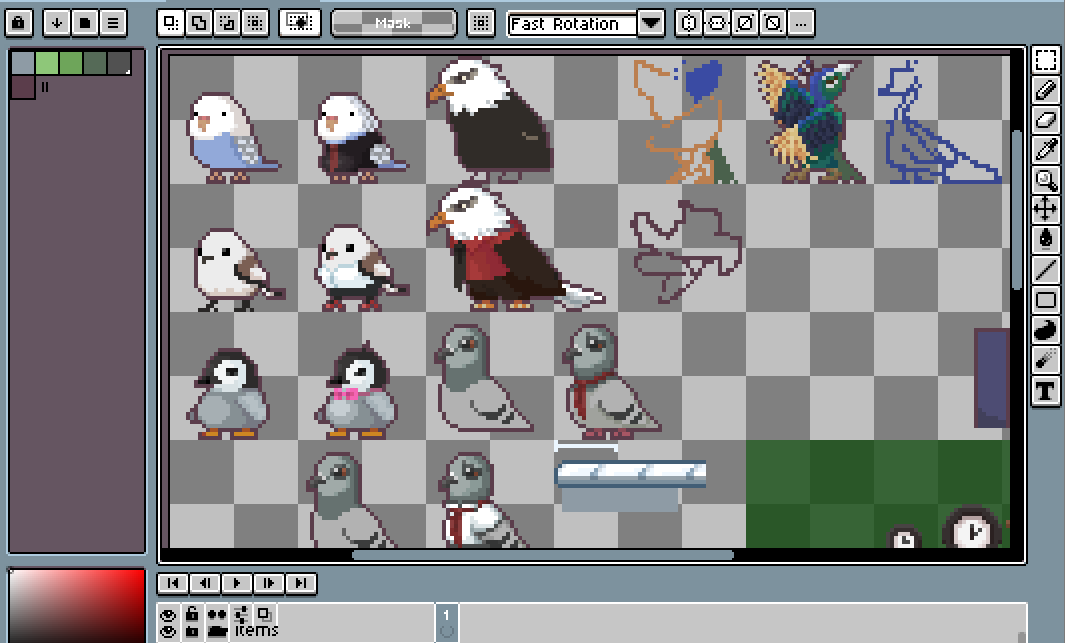
more birds!

timelapse of peacock

budgie sprite

Environment

After finalising the character sprites, I shifted my focus to the environment to build the world of Bird Corp. Using Aseprite, I created a consistent tilemap system for the walls and floors to establish the office’s structure. My goal was to create distinct zones that feel like a functioning workplace, starting with the Boss’s Office. I designed this space to feel authoritative yet quirky, featuring a large executive desk for the Eagle character and a panoramic window view. I also added small details like a parody “Mona Lisa” bird painting to add personality to the setting.

To mirror the mundane reality of corporate life, I developed the General Workspace filled with standard cubicles, computers, and a wall clock. I also included a water cooler, which will serve as a hub for the NPC birds, such as the Pigeon and Sparrow, to gather and simulate an active office environment. Furthermore, I detailed a restroom area complete with blue stalls and sinks to fully flesh out the building’s layout and add to the realism.

To bring these static backgrounds to life, I finalized the walking animations for the main Bird. This ensures the movement feels fluid as the player traverses these different stages of the office environment.

timelapse of eagle's room
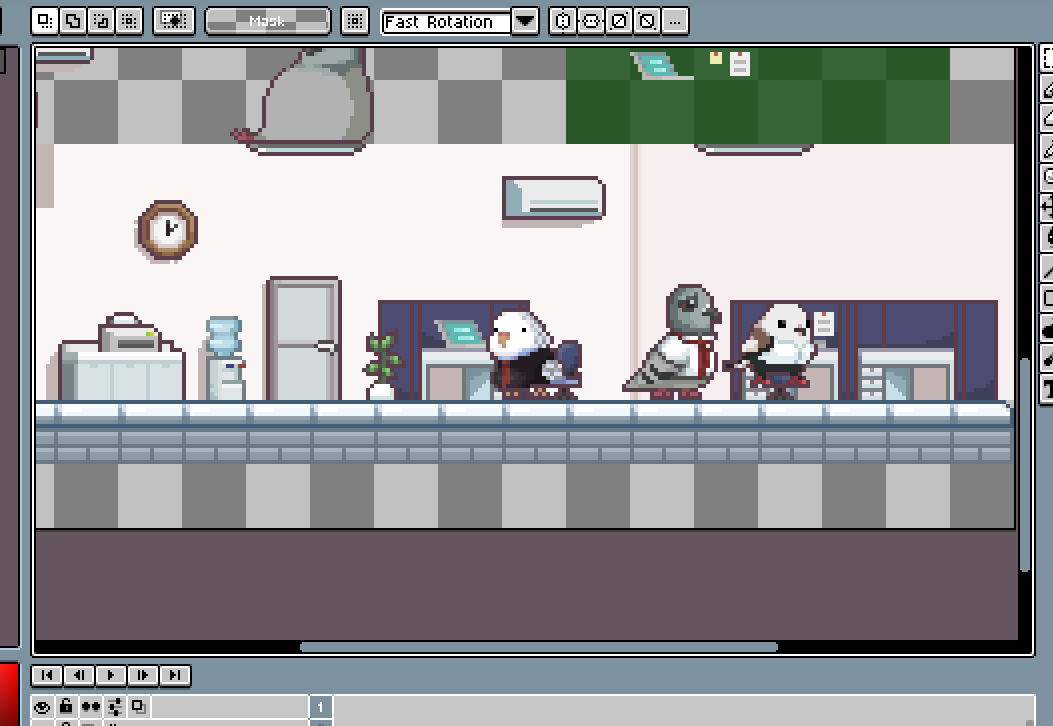
plan for office env
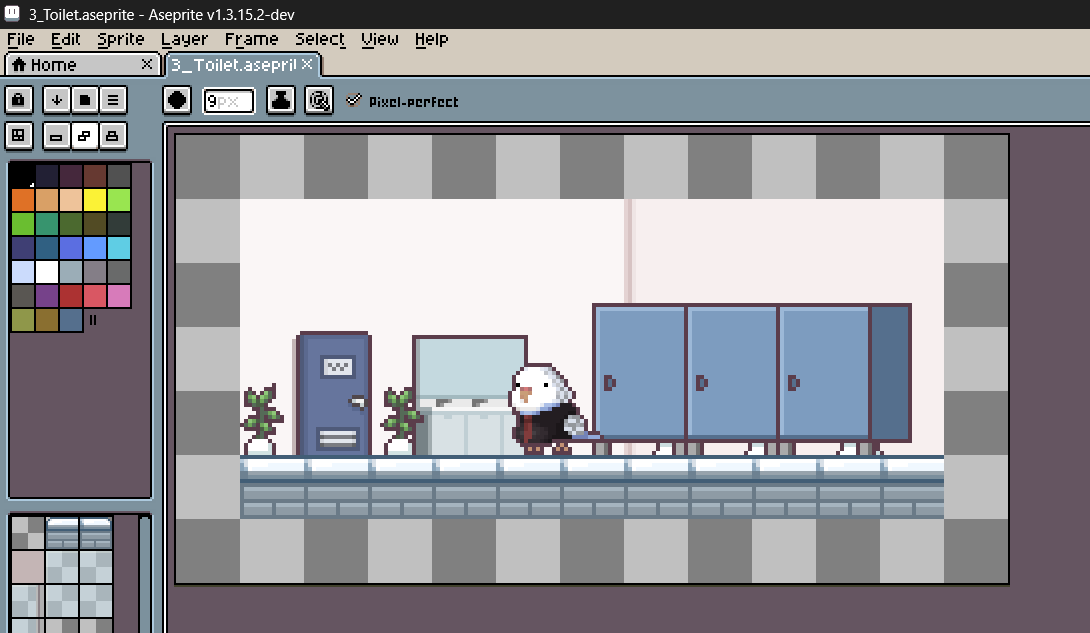
Toilet

toilet

User Interface Design (Time and Task Management)

To manage the game’s flow and player progression, I implemented two distinct User Interface (UI) elements on the Heads-Up Display.

On the right side of the screen, I designed a Clock UI that visually represents the current time of day - morning, afternoon, evening and night. This clock is not merely aesthetic but functions as a progression tracker. Instead of moving in real-time, the time shifts dynamically only as the player completes their assigned duties, linking narrative progress directly to gameplay actions.

On the left side, I integrated a Task Menu UI to keep the player focused. This panel serves as a constant guide by listing the current objectives the player needs to fulfill. By having these instructions always visible on screen, I ensure that the player remains aware of their immediate responsibilities within the office environment without needing to pause or check a separate journal.

For inventory management, I will be incorporating a Briefcase UI situated at the bottom left of the screen. Designed to align with the corporate aesthetic, this interface will function as a storage system for collected items and rewards, allowing the players to manage their resources.
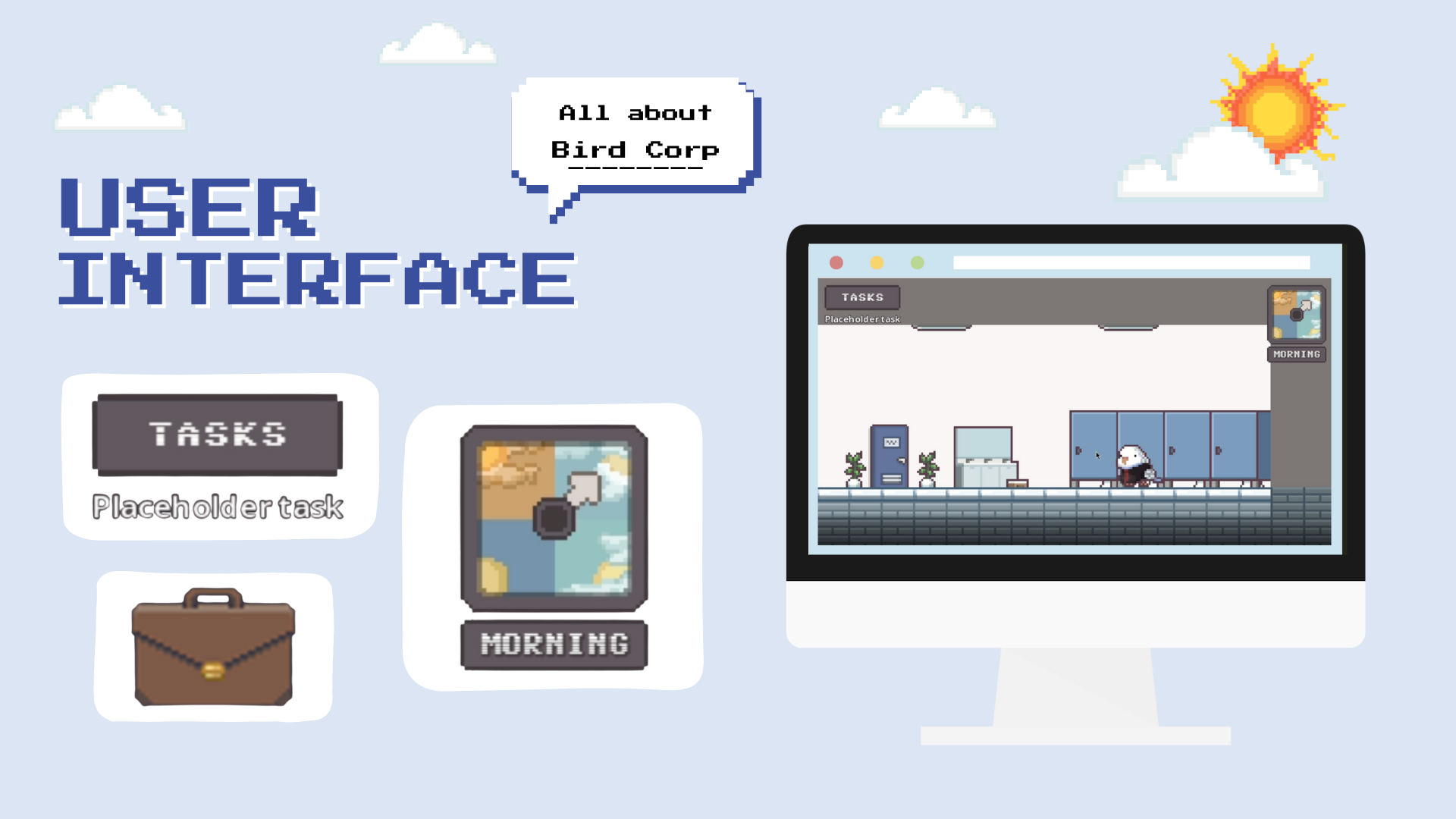
User Interface
User Interface

Bringing the world of Bird Corp to Life

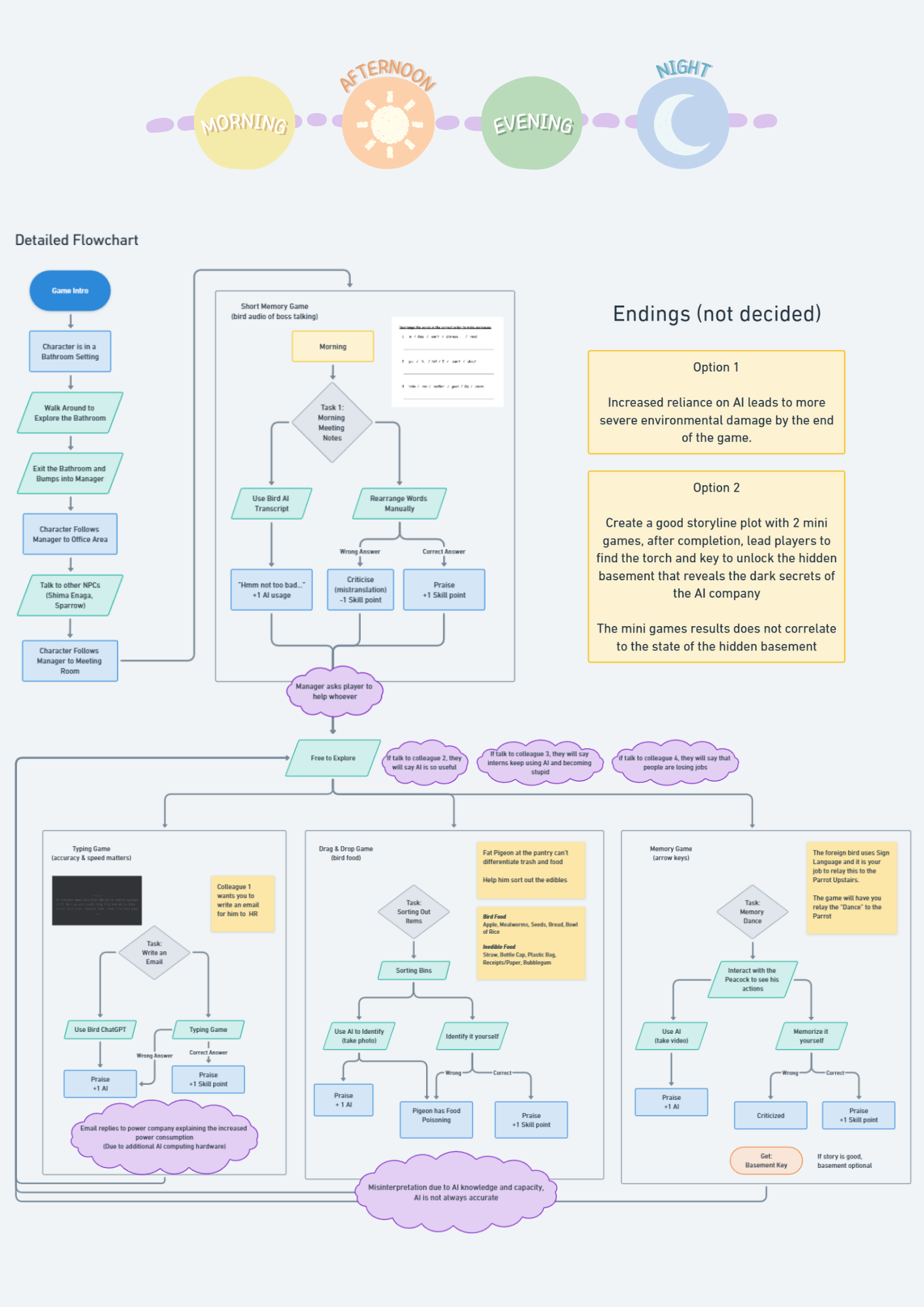
After making the basic assets, I began working on solidifying the game mechanics and storyline. I wanted this to be a game that was not just educational, but also fun and engaging. This involved designing relatable minigames in the form of office tasks, and meaningful Player-NPC interactions to keep players invested in the world of Bird Corp. My workflow has been highly iterative, with gameplay evolving constantly to address the game’s goals. As of today, the game’s opening flow is now finalised, but I am still refining the endings to deepen the narrative.

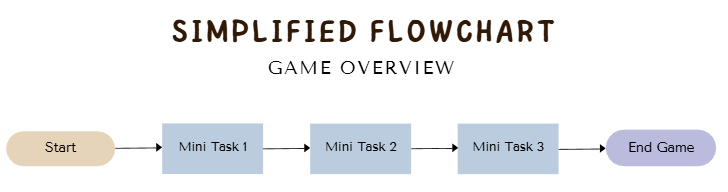
Detailed Flowchart

detailed flowchart

Overview


Key Takeaways

Iterative Design: Game flow evolved through continuous playtesting and refinement
Opening Finalized: Introduction sequence is complete and functional
Endings In Progress: Multiple ending scenarios still being refined
Flowchart Method: Visual planning helped structure complex branching narrative

Game Engine

To get started with Godot, I searched for Beginner Tutorials on Youtube and followed along in order to make the basics of a game (walking, tilemap, collisions). I learnt that at the foundation of Godot games, are many types of nodes/scenes I can utilise to make my game.

Basic player movements and tilemaps

My Game Making Cycle

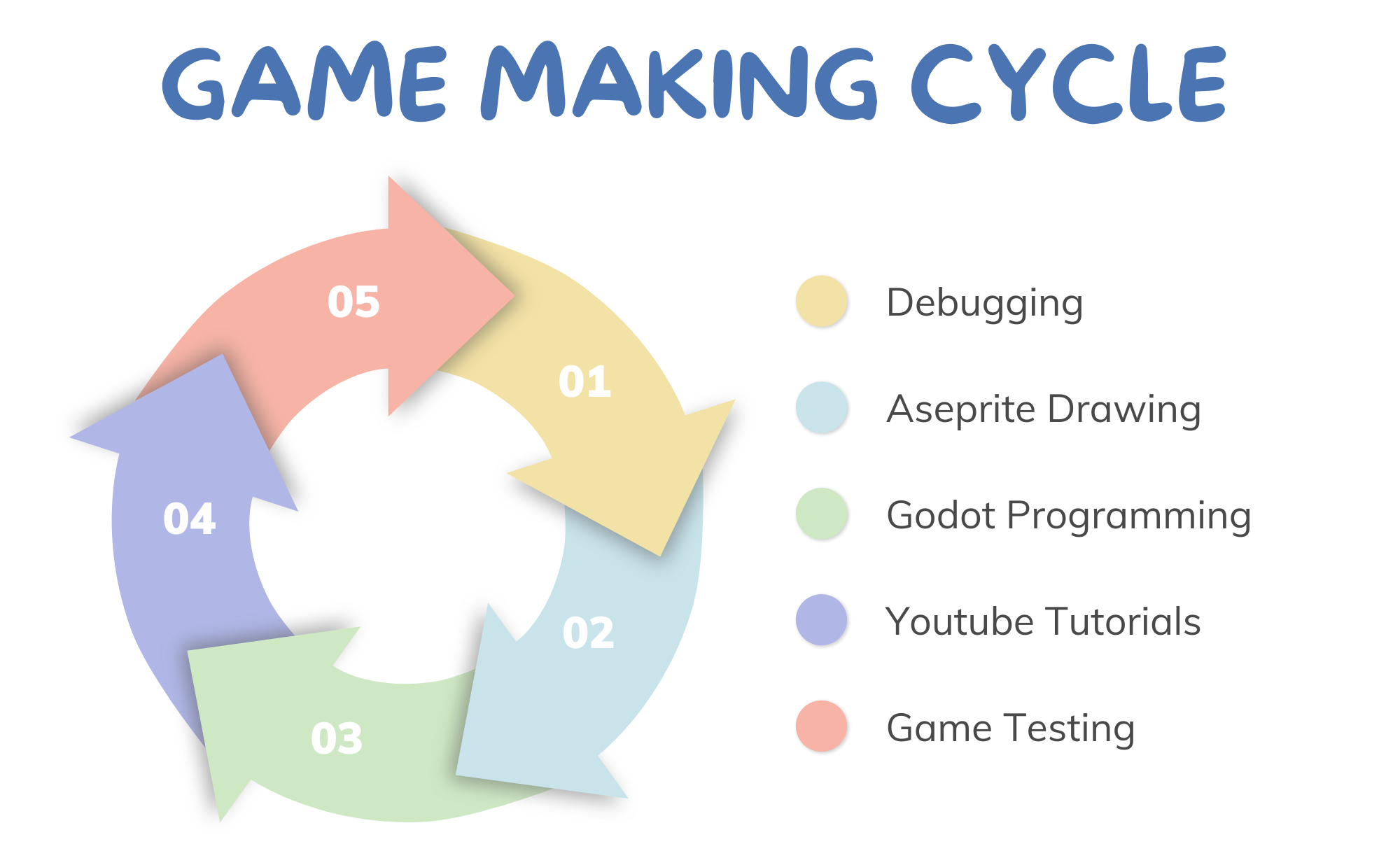
My development process settled into a continuous iterative loop: designing, programming, and troubleshooting via online resources. This repetitive cycle of playtesting to catch errors, debugging through Youtube tutorials, and fine-tuning became the rhythm of the project, allowing me to constantly refine the game.

Getting Version 1 ready has been a challenging and time-consuming sprint. I have been working late nights on limited sleep; averaging just 5 hours of sleep a night, dedicating every spare moment to finalising the prototype.

Game Making Cycle

Challenges

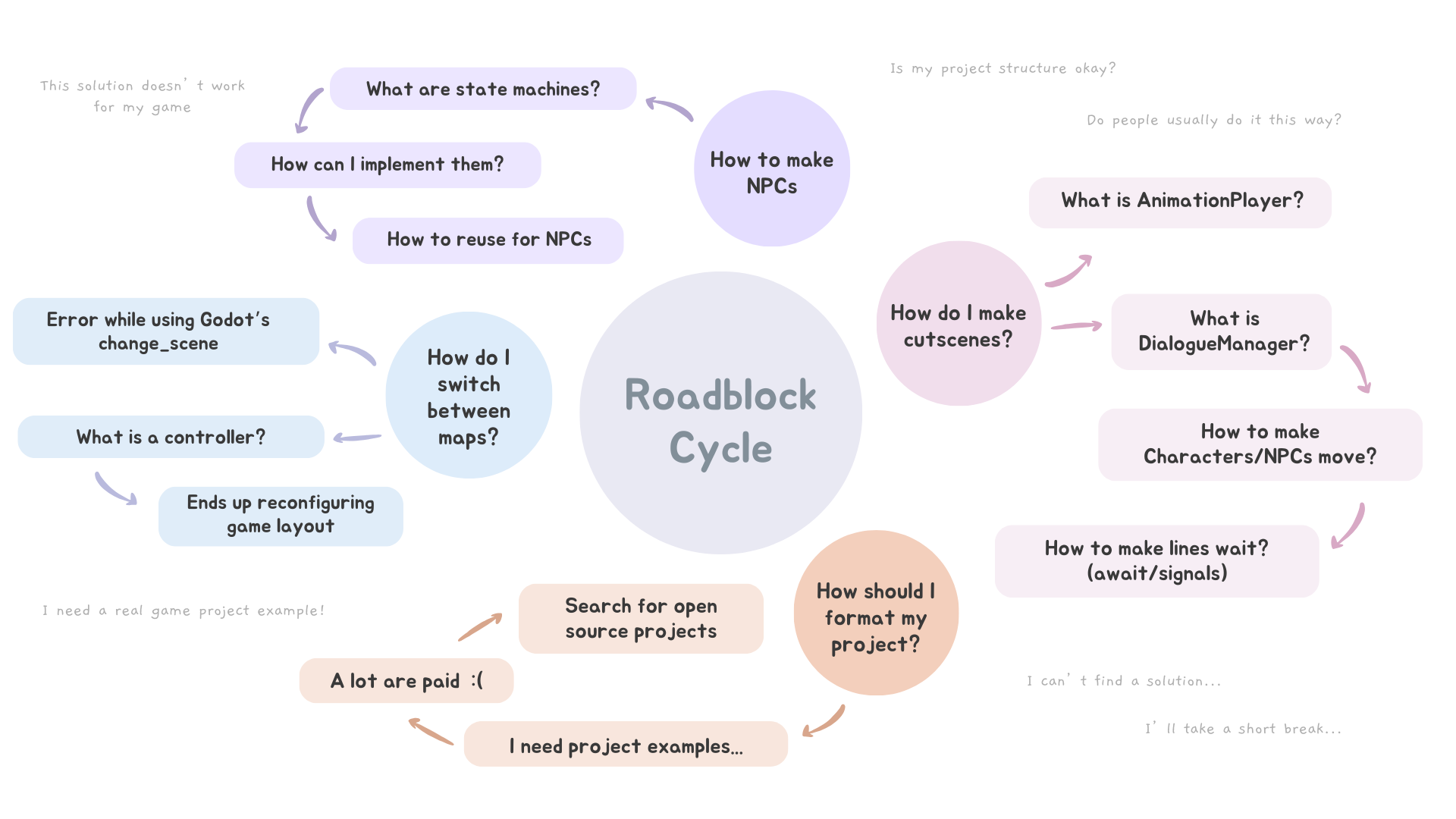
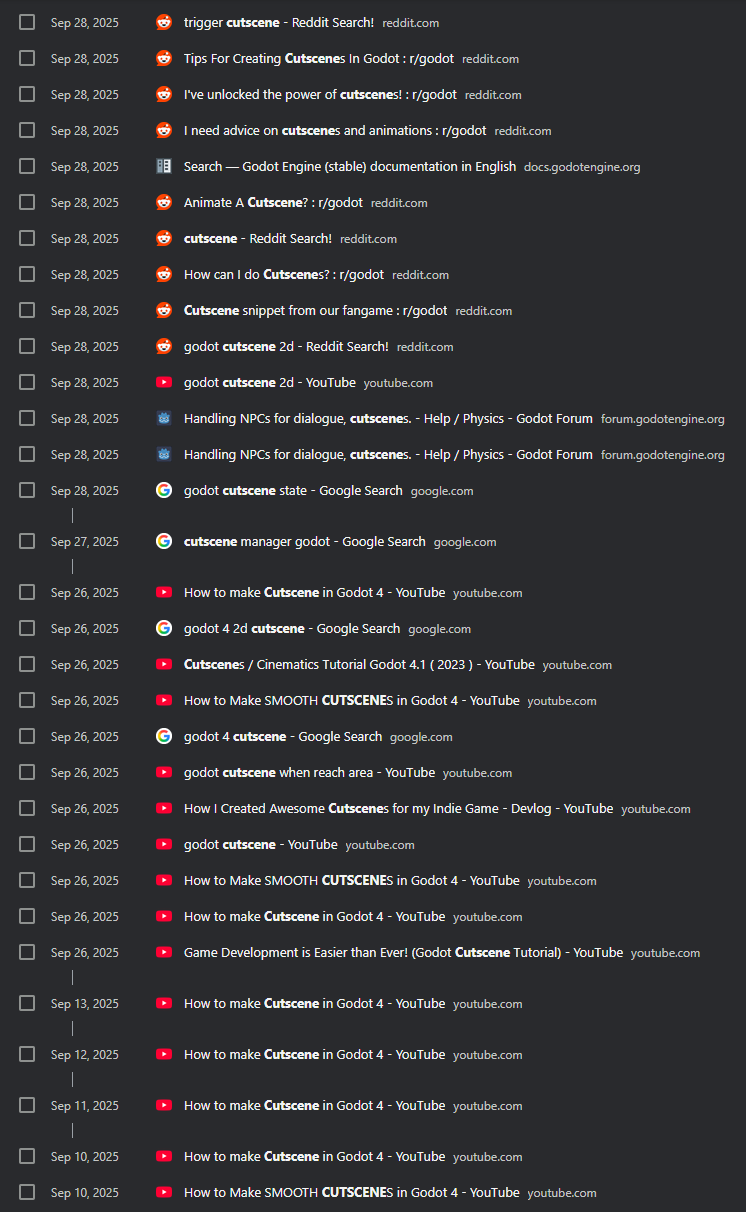
When I was done following the basic tutorials, I hit a massive roadblock. I wasn’t sure whether I was overthinking it, but there were so many issues that it got overwhelming at some point. It felt like I was in a loop of watching the same tutorials, visiting the same forums, with no solution in sight. That is when I decided to instead, focus on other simpler tasks.

With a fresh mind, I revisited a video I had watched multiple times, and realised the answer was there all along.

Having successfully overcome my first challenge, I thought I’d figured everything out and the rest would be a piece of cake, however I was wrong. This pattern repeated itself several times, but with each cycle, the challenges became easier to tackle, surprisingly.

A screenshot of my search history


Key Takeaways

Persistence Pays: Watched same tutorials multiple times until solution clicked
Break-Through Pattern: Taking breaks and focusing on simpler tasks provided fresh perspective
Learning Curve: Each challenge became easier to tackle than the last
Time Management: Complex problems take longer than expected — plan accordingly

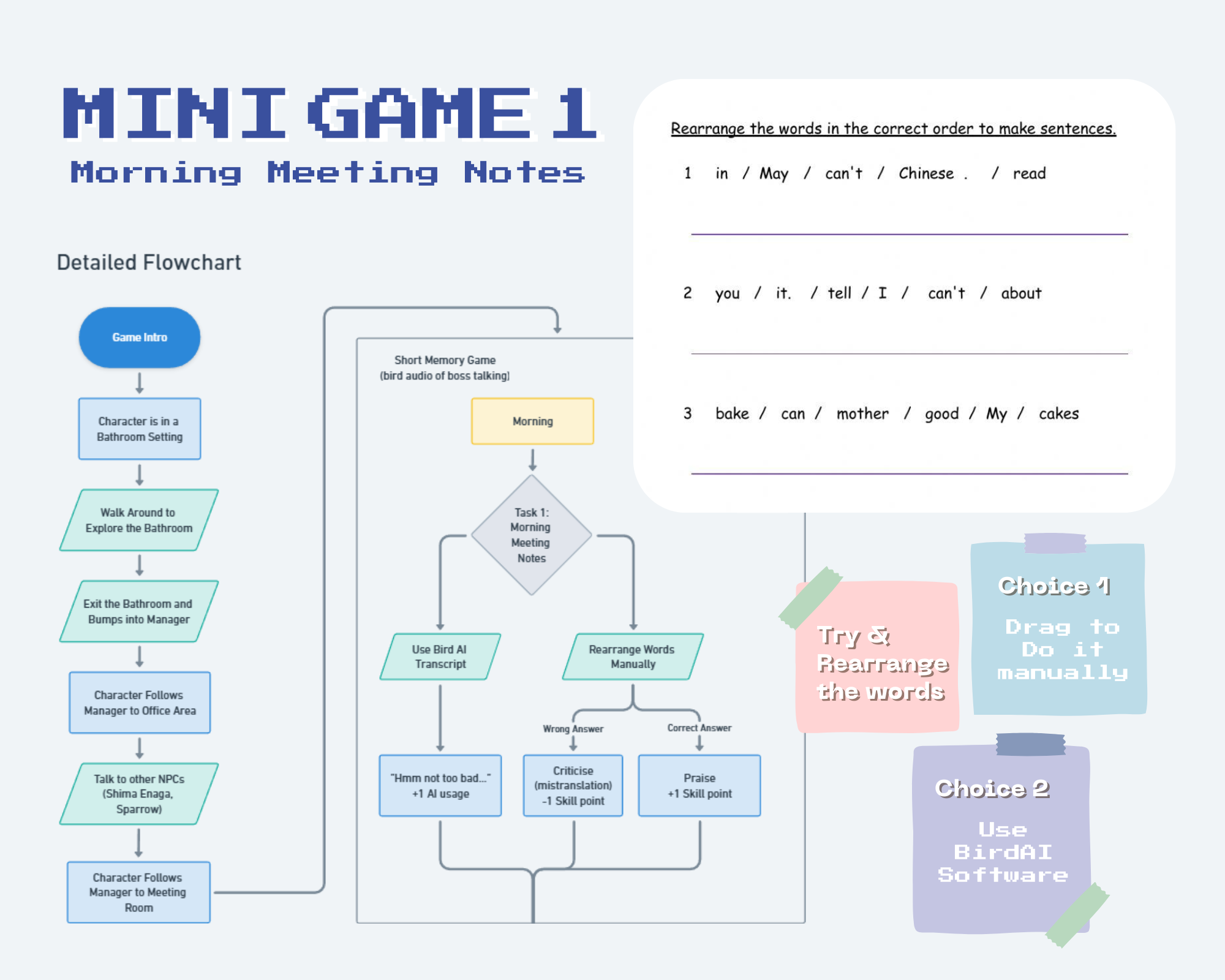
Mini-Game 1 - Morning Meeting Notes

Having cleared the hurdle of the game's opening and narrative systems for version 1, I started to work on developing the first office task.

This mini-game simulates taking morning meeting notes, the core mechanic involves a 'drag-and-drop' puzzle where players must arrange scrambled words to form coherent sentences. Here, I implemented the first instance of the 'Manual vs. AI' choice, allowing players to either do the work manually or use the BirdAI software to complete the task instantly.

Environmental Theme Integration

While the sorting mechanic serves as an accessible introduction to gameplay, the content being sorted connects directly to Bird Corp’s environmental themes. The meeting notes contain references to:

  • AI server energy consumption reports
  • Carbon footprint analyses of company operations
  • “Green initiatives” that the company publicly promotes

This creates subtle environmental messaging embedded within the gameplay itself — an application of Bogost’s (2007) procedural rhetoric where the game’s content reinforces its themes without explicit lecturing.

The Manual vs. AI Choice: Procedural Rhetoric in Action

The choice between manual work and AI assistance is central to the game’s message:

ChoiceImmediate EffectHidden Consequence
ManualTakes longer, requires effortBuilds genuine understanding; NPCs appreciate your work ethic
BirdAIInstant completionContributes to the company’s growing AI dependency; environmental costs accumulate invisibly

This mechanic embodies the game’s core argument: AI offers seductive convenience, but the true costs remain hidden until players explore deeper into the narrative.

Mini Game 1 Chart

Manual

BirdAI

To-do List:

  • “E” to interact (visual indicator above NPC interactables)
  • SFX walk sounds for NPCs
  • Unique dialogue pitch for each NPC
  • Change dialogue styling
  • Load quest data into Tasks IU
  • Link clock timing and animate clock arrow

Key Takeaways

Core Mechanic Implemented: Manual vs. AI choice is now playable
Environmental Integration: Meeting notes contain references to AI energy costs
Procedural Rhetoric: Mechanics embody the message about AI convenience vs. sustainability
Tutorial Needed: Players need visual "E to interact" prompts

Gameplay - Version 1

Gameplay Video

In Progress (to be Fixed)

Game Bugs

Error 1 - If player walks into cutscene before Manager stops, the game get stuck

Error 2 - If player does not enter the room with Manager, player gets stuck outside

To-do List:

  • “E” to interact (visual indicator above NPC interactables)
  • SFX walk sounds for NPCs
  • Unique dialogue pitch for each NPC
  • Change dialogue styling
  • Load quest data into Tasks IU
  • Link clock timing and animate clock arrow

Implementing a Tutorial System

Addressing User Feedback

Following feedback from user testing and academic review, one of the most critical improvements needed is a tutorial system. Players were confused about how to interact with objects and NPCs, particularly how to access the minigame from the desk.

"It's not totally clear how to get to minigame from the desk. A prompt to press 'E', or to 'try talking' would work!"
— Feedback from assessment review

Planned Implementation

1. Visual Interaction Prompts

I will implement floating “Press E” indicators that appear above interactable objects and NPCs when the player approaches. This follows established UX conventions in games like Stardew Valley and Undertale.

Technical Approach:

  • Create an InteractionPrompt node as a child of interactable objects
  • Use Area2D collision detection to show/hide prompts based on player proximity
  • Animate the prompt with a subtle bounce to draw attention

2. First-Time Player Guidance

For new players, I will implement contextual tooltips that appear during the first few minutes of gameplay:

TriggerTooltip Message
Game start”Use WASD or Arrow Keys to move”
Near first NPC”Press E to talk to colleagues”
Near desk”Press E to start your work tasks”
First minigameBrief overlay explaining drag-and-drop mechanics

3. Optional Help Menu

A help menu accessible via the pause screen will provide a controls reference for players who need a reminder without interrupting gameplay flow.

Design Philosophy

Following the “failing forward” approach established in my game design philosophy, these tutorials will be:

  • Non-intrusive: Prompts fade after first use
  • Contextual: Appear only when relevant
  • Optional: Experienced players can skip or disable hints

This implementation addresses the accessibility concerns while maintaining the exploratory feel that makes Bird Corp engaging.

Strengthening Environmental Theme Connection

Feedback Analysis

A key piece of feedback from my assessment highlighted a gap between the game’s environmental themes and the actual gameplay mechanics:

"I'm not seeing a huge amount of connection between the themes and the actual 'game design' here... I want to be able to engage with a task and see how it connects to the environment."
— Assessment feedback

This critique aligns with Bogost’s (2007) concept of procedural rhetoric — if the game’s mechanics don’t embody the environmental message, the educational impact is diminished.

Proposed Solution: Environmental Assessment Minigame

Building upon the existing “Manual vs. AI” framework, I am developing a new minigame concept that directly connects gameplay to environmental themes.

Concept: Wind Farm Site Assessment

Players will be tasked with evaluating potential wind turbine installation sites for bird safety — a real-world environmental concern that connects directly to Bird Corp’s avian characters.

🌬️ Minigame Flow

  1. Image Display: A potential wind farm site appears on screen
  2. Assessment Phase: Player examines the image for bird-safety indicators
  3. Progressive Hints: The longer you look, more clues and tips appear
  4. Decision: Approve or reject the site based on environmental criteria
  5. Timer Pressure: Complete multiple assessments within a deadline

Environmental Learning Objectives

Through this minigame, players will naturally learn about:

  • Bird migration patterns and how wind farms can disrupt them
  • Habitat assessment criteria used by real environmental consultants
  • The tension between renewable energy and wildlife protection

The AI Choice Integration

The “Manual vs. AI” choice remains central:

ChoiceGameplay EffectNarrative Consequence
ManualPlayer carefully assesses each site; more time-consuming but accurateCoworkers appreciate thoroughness; builds positive relationships
BirdAIInstant completion; some sites may be incorrectly assessedBoss likes efficiency; but incorrect assessments have story consequences

This creates meaningful procedural rhetoric: the game’s rules demonstrate that quick AI solutions may miss nuances that matter for environmental protection.

Visual Design

The assessment interface will feature:

  • Satellite-style imagery of potential wind farm locations
  • Animated bird flight paths overlaid on questionable sites
  • Environmental data panels that reveal information over time
  • A grading system showing assessment accuracy

Implementation Timeline

This enhancement is planned for the next development iteration, building upon the existing drag-and-drop infrastructure while adding:

  1. Image-based assessment UI
  2. Timer and scoring systems
  3. Progressive hint reveal mechanics
  4. Integration with the existing NPC relationship system

Difficulty Scaling System Design

The Scaling Challenge

Feedback raised an important concern about the current minigame design:

"I'm not sure how the word sorting will 'scale' which is to say, get more challenging."
— Assessment feedback

For the game to maintain engagement throughout, the difficulty must progressively increase while remaining fair and learnable.

Difficulty Scaling Framework

Drawing from game design literature on flow states (Csikszentmihalyi, 1990) and progressive difficulty curves, I am designing a multi-dimensional scaling system.

Dimension 1: Quantity Scaling

As the game progresses, the volume of work increases:

DayItems to SortTime LimitAI Temptation
Day 13-4 itemsGenerousLow pressure
Day 25-6 itemsStandardModerate
Day 38-10 itemsTightHigh pressure
Day 4+12+ itemsVery tightOverwhelming

Dimension 2: Complexity Scaling

The sorting task becomes more nuanced:

Early Game

  • Simple binary categories (e.g., "Urgent" vs "Not Urgent")
  • Clear visual differences between item types
  • Forgiving drop zones

Late Game

  • Multiple overlapping categories
  • Subtle distinctions requiring careful reading
  • Precise placement requirements
  • Distractors and red herrings

Dimension 3: Contextual Pressure

Environmental and narrative elements add psychological pressure:

  • NPCs hovering nearby watching your work
  • The boss checking in with impatient dialogue
  • Visual stress indicators (cluttered desk, piling papers)
  • Audio cues that intensify with remaining time

Adaptive Difficulty (Stretch Goal)

If time permits, I will implement adaptive difficulty that responds to player performance:

if player.accuracy > 90% and player.speed > threshold:
    increase_difficulty()
elif player.accuracy < 60%:
    offer_hints()
    maintain_current_difficulty()

This “invisible hand” approach maintains flow state by preventing both boredom and frustration.

Integration with Environmental Theme

For the wind farm assessment minigame, scaling includes:

  1. More complex site images with subtle bird hazards
  2. Shorter viewing times before making decisions
  3. Multiple sites to assess simultaneously
  4. Conflicting information requiring critical evaluation

Narrative Justification

The increasing difficulty is narratively justified through the story: as Bird Corp grows more successful (partly due to AI assistance), workload increases. This creates a natural escalation that reinforces the game’s themes about unsustainable growth and workplace pressure.

References

Csikszentmihalyi, M. (1990). Flow: The Psychology of Optimal Experience. Harper & Row.